
New Delhi, Oct 30: For global investors navigating public equities, fixed-income markets, mutual funds and increasingly sophisticated alternative investments, an important question extends beyond which asset will perform next: how can capital gain exposure to the underlying economic transformation of a country?
As infrastructure expands, cities extend into previously peripheral areas and new industrial and residential corridors take shape, land can become an important component of the country's economic transformation. Yet direct land investment remains difficult to evaluate. Information is fragmented, transactions can be opaque, regulatory permissions matter enormously, and the ability to sell an asset may be as consequential as the price at which it is acquired.
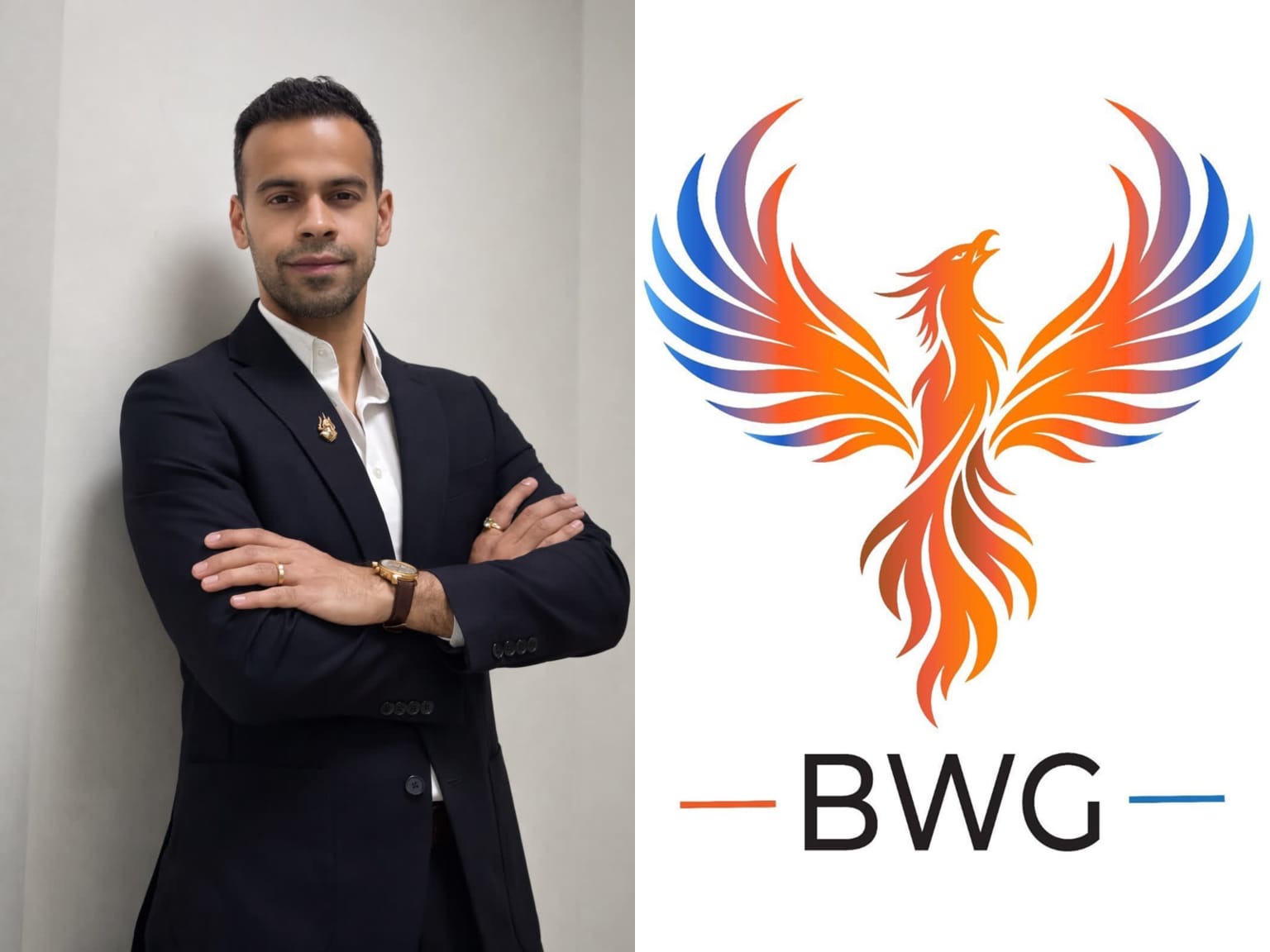
Bhaarat Wealth Group, an India-focused land research and investment firm, is building its proposition around this challenge. Its patent-pending Demand-Supply Intelligence system seeks to bring a structured, data-led approach to identifying emerging land opportunities, assessing market conditions and planning potential exits.
The ambition is not simply to participate in India's real-estate growth story. It is to make the intelligence behind land investment more systematic.
The missing conversation in global portfolio diversification
Investors have long considered equities, bonds, mutual funds and alternative assets when constructing portfolios. Direct land ownership offers a different form of exposure: a tangible asset whose economic value may be influenced by infrastructure, urbanisation, land-use permissions, development potential and local demand.
That distinction can interest family offices, long-term capital allocators and investors seeking exposure to India's growth beyond listed companies.
However, land is not a substitute for every financial instrument. Unlike publicly traded securities, individual land parcels can be difficult to value frequently, expensive to transact and slow to liquidate. Their outcomes depend heavily on location, title quality, regulatory conditions, acquisition price and the availability of a credible buyer at exit.
The investment question, therefore, is not whether land is inherently safer than financial markets. It is whether a particular land investment offers a sufficiently well-researched opportunity relative to its risks, holding period and liquidity requirements.
This is where BWG seeks to differentiate its approach.
From location speculation to Demand-Supply Intelligence
Traditional land investment often relies on local knowledge, broker networks and expectations about future development.
These inputs can be useful, but they may not capture the complete picture.
BWG's Demand-Supply Intelligence framework examines multiple signals, including registry values, transaction and sale velocity, government tender movements, master-plan intelligence, infrastructure development, zoning considerations, Change of Land Use and Floor Area Ratio.
Consider an emerging corridor. A proposed infrastructure project may attract attention, but the investment case depends on more than the announcement. Its implications must be considered alongside implementation progress, existing connectivity, actual transaction activity, permissible land use, development potential and the price already being demanded by sellers.
Similarly, increasing registry velocity may offer clues about market activity, while changes in CLU or FAR can affect a parcel's development economics. None of these indicators independently guarantees appreciation. Their value lies in the quality of their interpretation and verification.
BWG's system aims to combine these fragmented signals into an investment framework that evaluates not only where to enter, but why a location merits consideration and what conditions could support an eventual exit.
For international investors unfamiliar with India's local land markets, that distinction between a compelling growth narrative and a verifiable investment thesis is particularly important.
A technology-led approach to a physical asset
BWG describes its intelligence system as the result of approximately seven years of development. Its intellectual-property status is patent pending.
The company's philosophy places research alongside physical due diligence, including title and encumbrance checks, regulatory assessment, comparable transactions and on-ground intelligence.
Founder Sahil Marshall's ambition is to build a more structured investment process around an asset class that can be highly localised and information intensive.
"Capital should not enter a land market merely because the growth story sounds convincing. Investors need to understand what the evidence says, which risks remain unresolved and how an exit could realistically be achieved," is a proposed spokesperson quote for approval. The principle is relevant beyond India: better information does not eliminate investment risk, but it can improve the questions investors ask before committing capital.
India's growth corridors and BWG's investment thesis
BWG began building its portfolios in Ayodhya and identifies Sohna, Dholera, Goa and emerging spiritual corridors among its expansion markets.
The company reports a 4.5X return on invested capital in Ayodhya in under 18 months and frames approximately 2.5X return on invested capital within 18 months as its broader investment thesis. These are company-reported claims, not guaranteed outcomes, and should be supported by appropriate documentation before publication.
BWG also aims to develop approximately 18 city portfolios and reach around ₹8,000 crore in assets under management over the next 24 months.
For prospective investors, these ambitions raise an important due-diligence question: can a research methodology developed in one market produce consistent, independently assessable investment decisions across different geographies and regulatory environments?
The answer will depend on the quality of the evidence, the discipline of execution and realised outcomes over time.
A new category of investment intelligence?
The international opportunity is not to portray Indian land as risk-free, nor to suggest that it will outperform stocks, bonds or mutual funds. It is to invite a more sophisticated evaluation of land as a potential real-asset allocation.
Cross-border investors must additionally assess applicable investment structures, foreign-investment rules, taxation, currency exposure, ownership rights and repatriation requirements with qualified advisers.
Access to direct land ownership may differ substantially by investor type and structure.
For BWG, the larger ambition is to establish an intelligence layer between capital and land: one that connects market signals, regulatory realities, on-ground verification and exit planning.
As investors reconsider how they gain exposure to economic growth, India's emerging land markets offer a consequential question. Can a traditionally fragmented asset class become more legible to capital through better research?
Bhaarat Wealth Group is building its answer around Demand-Supply Intelligence. Its long-term credibility will rest not on the size of the promise, but on the evidence behind the decisions and the outcomes those decisions ultimately produce.